Showing posts with label Enda O. Breadon. Show all posts

Thursday, June 14, 2012

The Future of Puppet Slams


Leading Puppet Slam Artists reflect on where they see the Puppet Slam movement in the future. Where do you see the Puppet Slam movement in the future? Join the conversation on our Facebook Page.

Dolly Wiggler Cabaret #Calgary, The Wind Up Arsenal, 2011, Photo: Sean Dennie

Roxie Myhrum, curator of Puppet Showplace Slam #Brookline
I see more collaboration between puppeteers and musicians. Puppet Playlist did this successfully, and many of our regular performers are musicians themselves or are tapped into the musician community. And puppet shows are infinitely better with live music.

Honey Goodenough, curator of PuppetPandemic
 I’m constantly surprised by the support this movement has inspired. With the help of many friends from the PSN, I have partnered with other Slams to tour Puppet Pandemic:

I would really love to see some of our young puppeteers get to work the circuit nationally and bring back here what they learn.  And now that I’ve produced a slam I’d love to return to Atlanta where I was at best a fringe meteor to the puppet scene and watch the slams there with a whole new perspective.  As for the future of the Puppet Slam Network, I’ll probably look like an idiot if I make any predictions.

Beau Brow, curator of the  Puckin’ Fuppet Show
The Puppet Slam at DragonCon and the National Puppet Slam  #Atlanta 
I would love to see a puppet slam tour, it would be a feat to find time when enough people were available to do it, but a week or so touring up a coast or the Midwest, or somewhere, putting on puppet shows and maybe workshopping in cities to help them start puppet slams would be a really lovely endeavor.

I also like the idea of encouraging slams to get video projectors and screens and have a system where slams can show other slam's work, either as filler, if it's needed, or to show some brilliant show that just happened in Seattle to the fine folks of Asheville, because how else will they get to see it?

Alissa Hunnicut, guest curator of New Brew #Brooklyn
 I really appreciate what the Puppet Slam Network does with financial granting for the people who produce slams on a regular basis.  I found out the hard way with my first producing experience how much money it costs to do a full slam in a theater space out of pocket when you pay your puppeteers, lighting designer, sound designer, publicity, programs, host, etc.  If we want people to produce evenings of high quality theater, the financial help that the network is doing is so important.

I love the communication that has opened up between slams cultivated by the Slam Network. It's a great resource for a new performer to find performance opportunities if they aren't tapped into those in their area.  I hope the network continues to grow its support of the individual performer along with the producers.  Offering ways to showcase their work (maybe individual pages with a simple CMS performers can use to generate a profile), and perhaps offering financial support for developing new short form puppetry is an area that could be considered.

Valeska Populoh, curator of Puppet Slamwich! #Baltimore:
More slams in more cities so that it is easier for people to tour from one site to another. We still need to get better at coordinating our dates with other slam sites, though! This can be tough, since many slams are organized by a volunteer crew of folks with other jobs.  The Puppet Slam Network really helps us get a bigger picture of what is happening along the East Coast in the coming few months!

Evan O'Television, host of Blood from a Turnip #Providence
I would like to see the Puppet Slam Network continuing it's current trajectory.  It's pretty inspiring to see it grow.  And I would like to see more and more of the Puppet Slam Network in person.  Namely, I would absolutely love to have a majority of the shows I do in 2013 to be at Slams around the country.  Puppet shows and puppet audiences have always been my favorite crowds.


Special thanks to Paul Eide from Puppetry Journal for helping to edit this entry.

Friday, May 18, 2012

Fabulous Failures & What Can We Learn?

What can we learn from our mistakes?  Leading puppet slam curators and artists open up to reflect on some fabulous failures and spectacular slam disasters and what can be learned. Have you had a fabulous failure at a slam? Join the conversation on our Facebook Page and share your story! 
 

Austin Puppet Incident #Austin
Amanda Maddock, Jessica Simon & Caroline Reck, 2011, Photo: Chris Owen
Alissa Hunnicut, guest curator of New Brew #Brooklyn
Mostly you learn that it's live theater and anything can happen.  So think on your feet when there are technical glitches and be honest in your performance.  You also learn pretty quickly what doesn't work in a slam context when you have no control over what comes before your performance..

I don't think any of them have been disastrous. Some of them have pieces that are "less successful" than others partly because it might be a less curated slam or a slam that really welcomes less experienced performers, but that's the good part about a slam.  

Everyone can try something out and if it doesn't really work, the audience is on to a new thing pretty quickly. Like we all say, "too short to suck."


Gepetta, Performer-At-Large #Philadelphia
I think I count on failure or at least making mistakes to some degree. A lot of my stories are very wordy, more poetic than funny, and I often forget my lines, though if I can quip with the audience its okay.  A lot of mistakes graduate into being essential parts of the show.  Recently, I lit my hair on fire during a performance at a crowded loft. That wasn’t at a Slam, though I think it would have gone over better if it had been.


Roxie Myhrum, Curator of Puppet Showplace Slam #Brookline 
I once put together a slam with a lot of artists who typically did shows in all different styles of puppetry, but somehow I overlooked the fact that the pieces they wanted to do for the slam were all shadow puppet acts. Oops. After that I implemented a more thorough tech form. We also once had a speaker fall on an audience member. Now we warn people who sit in the front row.   
One of Kristin McLean's occasional collaborators was the director of The Revolving Museum - an organization that curated site specific shows at various different locations all around Boston.  The director of the Revolving Museum had set up a show for First Night (New Year's Eve) Boston that he populated primarily with Puppet Slam performers.   He asked me to perform at it.  It was at the Cyclorama in Boston and there was a very cool set, and we were all in different rooms of a mocked-up house.  People were encouraged to wander around and it was definitely a very cool set up if you were a more interactive performer.  But the problem was that I was performing a 15 minute version of the "Ex Machina" show I described earlier.  And this piece also now included an audience-plant routine.  The biggest issue is that my pieces are narrative and definitely require the undivided attention of an audience.  Here, we were playing a venue where people would essentially wander through look at what we were doing for about 2 minutes and then move on. Because I perform with a recording it's difficult to stop or start over and nearly impossible to improvise.  So we just kept performing it over and over, often with no one in our space and just me and my friend and collaborator Mark Myatt (who was my audience "plant" originally intended to blend in with the never-constant audience).  Most of the time we were performing for no one, or else for people who took a brief interest akin to viewing animals in a zoo.. After performing in this show I have always taken pains to clarify that any show I am booked at is organized as a theatrical performance and not an "installation" style environment.
I can’t say I’ve ever been to a disastrous Puppet Slam, sorry! One slam I did attend was a bit awkward: it emphasized audience participation, insisting space be left for the public to contribute to the work. Unfortunately it underestimated the audience’s bravery, leading to long passages of awkward silence!

Kat Pleviak, curator of Puppet Meltdown #Chicago 
I was in a slam at a puppet festival and we were asked to bring two pieces, one of which was cut because the slam went to long. The piece we did show was too small for the space to be seen by anyone in the venue so no one got to enjoy it.   
A note to producers: Your slam performers are your guests and it should be your number one goal to help them succeed and have a great experience. A note to performers: be true to your work. If you walk into an event and can see your piece won't work, pull it. It does not help you to do a piece that disappoints based on a technicality. Know your work and show it to it's best.
Well, just this week I feel like I’ve experienced one of my biggest failures to date.  Between what felt like the great success of the first slam in February, I ran into some problems.  As I’ve said, I just directed Inspector General for TAG, a show with live actors and two different kinds of puppets that play minor characters.  Literally, the night Inspector opened several of TAG’s board members complained that sock puppets have no place on the TAG stage and are “not to the quality of what we do.”  The poster and all the promotional material used had the sock puppets to promote the show, but apparently that somehow got past the attention of some board members.  And they apparently hadn’t talked to the Artistic Director, who’d been talking excitedly about the puppets for around six months before the show ever went into rehearsal. At this point, I must take pains to again thank Brad Powell, TAG’s Artistic Director.  He went to the mat to defend both the puppets in Inspector and to defend the slam to his board.  But after some of the longest days I’ve ever experienced, it was clear that it was not in the best interest of the slam or of TAG to hold a puppet slam at a theatre where there were hostile board members. . .
A friend and fellow artist here in Honolulu gave me a “buck up” talk the other day saying that this was a lesson about focusing on the kind of work you want to do and making your own opportunities.  I guess that’s as good as a lesson as any.  This is all just in the last week, maybe after a few months of reflection I’ll have a real good perspective about what the moral of this tale is.  

Again, if there are other curators who have walked through similar experiences please, please, please email or call me.   I’d love to hear how others handled it so I can properly reflect and learn from the situation.

Lana Schwarcz, curator of Slam Noir #Melbourne
Hmmm... I think we've had a couple of pieces go longer than five minutes, and that was tough. I don't feel comfortable to name names or even describe these shows, but sometimes new pieces (which is what they are for the slams) can drag on a bit - the fat needs to be cut from them.  If there is one thing I have really learned from Pam Arciero (and by gosh there were many many things learned from that Hawaiian goddess) it's that things really have to be too short to suck.  So I think in the future, we really stick to that 5-minute rule. If it doesn't fit in 5 minutes, it doesn't go on. It makes the artist really think about what absolutely needs to be in there. Although sometimes that still gets ignored....

Beau Brown, curator of the  Puckin’ Fuppet Show
The Puppet Slam at DragonCon and the National Puppet Slam  #Atlanta 
Never try and simulate the sound of someone’s pelvis cracking by breaking celery into a microphone. It won’t work. 

Valerie Meiss, curator of the Wham Bam! Puppet Slam #Asheville
Oh wow... maybe my reluctance to say means that the wound is still fresh? . . Lets just say, technical requirements and Murphy's Law make wretched bedfellows. I have learned to cope with technical disasters in fun and friendly ways, to curb egos in a non-defamatory manner, and to (most importantly) take control of a situation (which is easier said than done), but I have certainly learned its importance
Oh, also, don't ever ever use a smoke machine!

Carole D'Agostino, Performer-At-Large #NYC
I succeed and fail at each event. I now always travel with my own tables, tape, extension cords, light bulb replacements, shadow screen replacements, scissors, sharpies, wipes, etc etc etc, because at each and every venue there has been something wrong or missing and I don't want my performance to suffer because the venue or I am ill prepared. Professionalism can only come by learning from failures.  
 
Jessica Simon, curator of Nasty, Brutish & Short Puppet Cabaret #Chicago 
[taken slighly out of context]  I got a bruise on my head from a flying piece of chocolate at the National Slam in Atlanta...

Thursday, May 17, 2012

Advice for Puppet Slam Artists & Curators

Looking for advice on starting a slam or being a better puppet slam artist? Find out what leading puppet slam curators and performers had to say when we posed the question: What advice do you have for up and coming slam artists or curators who are just starting out? Have something to add? Continue the conversation on our Facebook page


Adult Puppet Cabaret #SanDiego, Photo: Kiwi (Craig Brayton)


Evan O’Television - Blood From a Turnip #Providence
Maintain a spirit of adventurousness and experimentation but also never forget the importance of the audience.  What is the journey you are hoping to take them on?  How successful are you?  Whenever experimental work forgets to continuously engage or reward the audience then it misses the inherently conversational nature of live theater and risks being over-indulgent.

Alexander Winifield - Pirate Puppet Cabaret #London 
Don’t be afraid of failing miserably, or looking like an idiot. There is nothing so dangerous, nor full of potential, as a man unafraid of looking like an idiot.  Try not to make a habit of it, is all.

Kat Pleviak - Puppet Meltdown #Chicago 
Make each performance the very best it can be on the day you do it and take pride in your work! Have fun, share work, learn and grow and live!


Deborah Hunt - Sobre La Mesa Puppet Slam
Noches de Cabaret #SanJuan
Just do it!

Enda O. Breadon - Kolohe Puppet Slam #Honolulu
I’d tell them to give me advice.  I am making this shit up as I go and I really have no idea what I’m doing. 

Alissa Hunnicutt - New Brew #Brooklyn

I think a lot of your interview subjects have suggested going to a slam if you're interested in participating in slams. I totally agree.  See what other artists in your area are doing.  It's inspiring.  I am also a huge cheerleader for The National Puppetry Conference at The O'Neill Theater Center.  Your readers hear that name a ton too, I'm sure. The participant pieces that are developed in the evenings are where a lot of the slam content comes from in my circle of peers.  In a few days you are exposed to so many different methods and techniques for creating short form puppetry.  Plus it's a very tight network of puppeteers who have leads on performance opportunities, become fast friends, and it has a very special place in my heart.


Gepetta - Performer-At-Large #Philadelphia

The best advice I was given was from writer/performer Ryka Aoki, while I was on the Tranny Roadshow.  She said something along the lines of if you are nervous you need to channel that energy into the performance. The best performances I have done are when I want to pee my pants a little.


Honey Goodenough - Puppet Pandemic #NYC

Above all, be good to your performers. There can be a lot of stress related to producing an event, but if you want people to continue to work with you it must be worthwhile for the performers. We have to support this art form, from the ground up! So work hard, be kind, and have fun!


Roxie Myhrum - Puppet Showplace Slam #Brookline

Document your work! It's a pain in the ass, but it's well worth it--if a curator can see you looking awesome and rocking it out at one slam, they'll want you to do the same at their venue. Also, see lots of work! It's easy to get stuck in the studio or to be swamped by your own projects.  You'll grow as an artist by getting out more!


Jessica Simon - Nasty, Brutish and Short: A Puppet Cabaret #Chicago

Try and see a lot of stuff, talk to people after shows, ask veterans to do something with you. 


Valeska Populoh - Puppet Slamwich #Baltimore

Go watch a lot of performers. See what makes people laugh and respond. See what works and what doesn't. Don't be discouraged if your first performances flop or have flaws. Keep performing and making more work and seeing more work and talking to other performers in order to learn and grow!


Beau Brown - Puckin’ Fuppet Show #Atlanta

National Puppet Slam #Atlanta

DO IT! Start a slam! Crash an open mic night with your puppets! Make videos! Keep throwing stuff at the wall till it sticks! Something will and it will be awesome!


Valerie Meiss - Wham Bam Puppet Slam #Asheville

Do it! Do it now! And promote it, and promote it as an adult show, so you don't have to deal with upset people. (It shouldn't be a big deal, but sometimes it is.) And have fun with it! And send me an email if you have questions, I feel like I'm able to help out sometimes! And I've asked a bunch of questions myself, so I know whom to recommend.


Carole D'Agostino  - Performer-At-Large #NYC

Go see shows, take notes. Make your own shows and rehearse the heck out of them. When you travel, bring your own tape and extension cords. You have something to learn from everyone- and it's a good idea to be aware. Also, save all your receipts- these events are tax write-offs. This is your career!


Cathy Shaw – Puppet Art Attacks #NYC
The messiest parts are the changeovers. You need someone who will run and organize the changeovers. I like it when all of the participating artists are part of making the event work - it really establishes a community fast.  They should each have a part to do in the changeovers. Then you need someone to carefully go through the pieces with each artist, setting cues in a cue-to-cue fashion, building light and sound cues only - NO RUN THROUGHS! We are able to do 10 or 12 acts in 2 hours and all the cues are executed near perfect in the show. I do that, facilitating communications between the designers and the Stage Manager and the Board Ops and keeping things moving forward.

The artists may not be used to writing out a script (or they might say there isn't any dialogue, or that their piece is easy, just lights up lights down) - but still they have to write out a narrative in advance that the stage manager can use to record her cues (if he/she will be calling the show.) Otherwise the Board Ops need something that they can refer to during the show to jog their memory for the cues. All of the pieces might be easy separately, but put together it is an hour or more show with a lot going on. So, the artists must write a script that the crew can use to record what they need to record to run the cues as efficiently as possible. Even knowing if they will be onstage behind the host frozen to start, or if they will enter in darkness after the host has introduced them - all of this must be written in a script - its all part of how their piece resonates--so they should take care of every single detail and write it in a script they can give people who will execute cues for their piece.  They should get it to you in advance. Digital is best because the Stage Manager can format it just the way they like to write in cues.

Tuesday, April 17, 2012

Honolulu Puppet Slams: Enda O. Breadon Interview - Part 2

Enda O. Breadon curates the Kolohe Puppet Slam in Honolulu and has worked as an actor, director, movement coach and playwright across the United States and Europe.  As a teaching artist in creative drama, Enda employs both clowning and puppetry.  His lifelong love of puppets has led him to include them in a number of shows that he’s written and directed.  While living in Atlanta, he was mentored by Clint Thornton and Spencer Stephens, who he met at the Center for Puppetry Arts. Enda briefly studied puppetry at the University of Hawai’i.  
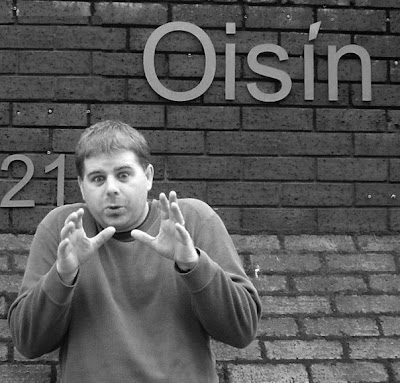

M: Is Honolulu part of a slam circuit?
EB: For all practical purposes, the answer to all of that is “no.”  There’s a really great, fairly new burlesque troupe here in Honolulu, Cherry Blossom Cabaret.  Last October Chinatown hosted Hawai’i’s first ever fringe festival and there’s a new, unnamed clown/physical theatre workshop that is about two months old, so there’s a young art scene with a lot of chance for overlap that hasn’t fully materialized as strongly as I feel it is about to.  And in fact, it was a connection through Cherry Blossom that we were able to get a new location for the slam this month.  I’m told some of the Cherry Blossom dancers will make appearances in slams/cabarets on the west coast, particularly the Bay area.  But most local artists don’t think in terms of circuit because this is an expensive rock fly on and off of - San Diego is as close to New York as it is to Honolulu. 
 
M: Dang!
EB: And while our economy depends on it, the idea that this is place is some kind of theme park in the middle of the ocean, doesn’t encourage artistic interaction.  We’ve seen a lot of people come out here, give a half-ass performance because they really just want to be on vacation and then book it out of here.  Because of what we get from national performers some people here really believe we are a “less-than” destination artistically and there are others that look at what we get from the outside and have a really low aesthetic bar – it’s a cycle.  That said, there have been some really great performers who have come through and some promoters doing yeoman’s work, but they are in the minority.   I hope both Kolohe Puppet Slam and our fringe festival become a destination for West Coast artists and are part of encouraging local artists to start thinking in terms of a circuit and getting their work out there.  But if it happens it’ll probably take some time. 

M: Tell us about a fabulous failure and what you've learned from it.
EB:
Well, just this week I feel like I’ve experienced one of my biggest failures to date.  Between what felt like the great success of the first slam in February, I ran into some problems.  As I’ve said, I just directed Inspector General for TAG, a show with live actors and two different kinds of puppets that play minor characters.  Literally, the night Inspector opened several of TAG’s board members complained that sock puppets have no place on the TAG stage and are “not to the quality of what we do.”  The poster and all the promotional material used had the sock puppets to promote the show, but apparently that somehow got past the attention of some board members.  And they apparently hadn’t talked to the Artistic Director, who’d been talking excitedly about the puppets for around six months before the show ever went into rehearsal. At this point, I must take pains to again thank Brad Powell, TAG’s Artistic Director.  He went to the mat to defend both the puppets in Inspector and to defend the slam to his board.  But after some of the longest days I’ve ever experienced, it was clear that it was not in the best interest of the slam or of TAG to hold a puppet slam at a theatre where there were hostile board members.   

M: So I guess we won’t be seeing the Lion King or Warhorse at TAG any time soon…
EB: The stress and potential for unhealthy resentment abounded.  But I’m trying to stay positive, I went to a hippy-ish Franciscan-nun-run elementary school.  I wish TAG nothing but success in their puppet-less future.

M: ::Sigh::
EB: A friend and fellow artist here in Honolulu gave me a “buck up” talk the other day saying that this was a lesson about focusing on the kind of work you want to do and making your own opportunities.  I guess that’s as good as a lesson as any.  This is all just in the last week, maybe after a few months of reflection I’ll have a real good perspective about what the moral of this tale is.  

Again, if there are other curators who have walked through similar experiences please, please, please email or call me.   I’d love to hear how others handled it so I can properly reflect and learn from the situation.

M: Please post that on our Facebook page, a great place to dialogue with other slam organizers… Why do you think Puppet Slams are important 
EB: For me, puppet slams are all about 2 things: 1) getting a chance to workshop your material and 2) experiencing the other puppeteers in your community/circuit.  We all know that not every idea we have is worth pushing to a full piece, that some of the best pieces need a lot of work to get good, and that pieces are awesome as short pieces. 

We also all know that getting to interact with other artists fills-the-well and motivates us to do more and better work.  The proverbial rising tide raises all the proverbial boats until the sailors puke over the proverbial sides.  

And to a much lesser degree, it gives people a chance to see artists grow through their career in the same way music fans like to talk about the difference between an early album/show and what a band is doing in their 40s.  I think what Patton Oswalt is doing with the Comedians of Comedy is pretty much the same thing we’re trying to do with slams. 

M: What motivates you to create a puppet slam piece?
EB: The same sick thing in my soul that got me kicked out of class almost every single day of my elementary, middle and high school career. 

M: Which slam artists you are inspired by?
EB: I’ve already mentioned Nicole earlier.  Her ideas and enthusiasm are inspiring.  My friends Gregg Van Laningham and Qate Bean have some characters they’ve been working on the Atlanta puppet slam circuit that are apparently illicit in the slams and yet they get requests to do them at the kid’s birthday parties too.  So while I haven’t seen them live, the fact they have dirty puppets also performing kids’ parties is among the funniest things I’ve ever heard.   They’re great writers, even though I suspect they wouldn’t use the word “writer” to describe themselves. 

Speaking of writers, while not puppeteers, there are two writing partners that constantly inspire me and the ideas we bounce around are starting to make it into some of my pieces.  First is Joe Goltz, the funniest human being, period.  He’s a musician and part of the comedy scene in Chicago.  But Joe and I have been friends since elementary school and it was scripts we wrote in radio and TV class in high school that not only got me suspended but made me really want to create for life.  Second is Lani Murray, who first came up with the idea of a dirty Bronte puppet piece.  I don’t think I’ll ever enjoy a relationship with someone 45 years older than me that is more raunchy or fulfilling. 

M: What pieces do you have in circulation to perform in puppet slams? 
EB: Hopefully the Bronte piece soon.  I think I’m going to retire the Russian sock puppets, at least for a while.  It might just bring up stressful memories of the TAG situation. I’m thinking of bringing back the dog chases from Stewart Little and making a new piece with them that has nothing to do with the book.  I’d like to remount and tour a puppet version I did of Marki Shalloe’s One Hand Clapping.  It’s a great short script about masturbating. And I’ve got a puppet I love that is a blue monster, with a cool way of working the hands.  But I just can’t make any material stick.  Maybe some day.   Also, it’s not my piece, but I’d love to see Nicole’s Chucky piece get a little longer and go on tour.  It is so well done.      

M: Where can people contact you to perform?
EB: The best thing they can do is call or email me.  kolohepuppet@gmail.com or (808)457-9324.  I’ll probably screen the calls, so make sure to leave a message. 

M: What is the future of puppet slams?
EB: I would really love to see some of our young puppeteers get to work the circuit nationally and bring back here what they learn.  And now that I’ve produced a slam I’d love to return to Atlanta where I was at best a fringe meteor to the puppet scene and watch the slams there with a whole new perspective.  As for the future of the Puppet Slam Network, I’ll probably look like an idiot if I make any predictions. 

M: What advice do you have for up and coming slam artists just starting out?
EB: I’d tell them to give me advice.  I am making this shit up as I go and I really have no idea what I’m doing. 

M: Anything else we should know?
EB: Don’t sleep with a raccoon in your bed.  You are always welcome to come here and perform, I’ll do whatever I can with my meager resources to help (also contact promoter Tim Bostock).  But don’t come here with a lame-ass I’m on vacation attitude.  Don’t bring rabies to the islands. 

Monday, April 16, 2012

Honolulu Puppet Slams: Enda O. Breadon Interview - Part 1


Enda O. Breadon curates the Kolohe Puppet Slam in Honolulu and has worked as an actor, director, movement coach and playwright across the United States and Europe.  As a teaching artist in creative drama, Enda employs both clowning and puppetry.  His lifelong love of puppets has led him to include them in a number of shows that he’s written and directed.  While living in Atlanta, he was mentored by Clint Thornton and Spencer Stephens, who he met at the Center for Puppetry Arts. Enda briefly studied puppetry at the University of Hawai’i.

2008 Photo: Sandra Payne

Marsian: So you are hosting, Kolohe Puppet Slam this month?

Enda Breadon: Honestly, I regularly tell myself, “Holy crap, no one is going to show up to watch or be in this thing.”  I don’t know if paralyzing self-doubt is normally part of the process for other curators, but it is for me. 

M: How do you find acts?
EB: ..After deep philosophical arguments with myself about where to find performers and audience, I email and call everyone I know on Oahu who has any connection to puppetry.  A number see a “slam” as somehow beneath them, but I’ve seen some seriously gnarly folks getting excited and stepping up either to spread the word or enter. 

M: Like?
EB: Jeff Gere is a local puppeteer who deserves serious props (notice my hipster use of 90’s street terms, very “slam” they tell me).  The biggest support the slam has gotten is from Mark Branner, professor of puppetry at UH.  He’s championed the slam to his students and has us connected with the young performers that are the future of the local arts scene.  I’ve been on the UH campus a couple of times badgering his students to take part, with Mark’s support. 

M:  What inspired you to start hosting puppet slams?
EB: I am not, by any stretch of the imagination, an expert at puppetry.  I had three really strong motivations for making this happen: 

1. Selfishly as an audience member, I wanted to make sure there were opportunities for me to see more puppetry happening;

2. Through the puppetry classes at UH-Manoa there are a lot of young puppeteers here and I wanted to give all of them an opportunity to get in front of an audience and try out their material in a way that was not based getting a grade and made them feel like this was a community to stay and continue their careers;

3. In Atlanta I saw how great puppet slams in were for encouraging artists to gather and share ideas.   We had a few really great events serving this purpose, but I’d love to see at least 5-10 more. 

M: Have you performed at other slams?
EB: Again, I feel sheepish in answering this one.  Even though I lived in Atlanta for six years and worked there regularly for almost ten years, I never once performed in one of their many slams.  It was always on my to-do list, but a combination of a usually pretty-busy schedule and fear kept me on the sidelines of Atlanta’s slams – mostly the latter. 

M: Well, there’s no time like the present…
EB: I still kick myself in the butt for not using slams as a way to try out the puppets in several shows that I directed.  For example, in 2008 I did a version of Stewart Little that had some two dimensional puppets that allowed us to do some really fun chase scenes.  The prop designer called them “protest signs.”  I thought they worked great and got good feedback, but to this day I wish I’d had an extra 3-ish hours of rehearsal time with them.  I could’ve tried them out at a slam, problem solved.  But I guess my head was in my okole.       

M: So you have been hosting your slam at The Actors’ Group in Kohole..
EB:  First, I think it’s important to say that the slam might not exist if it were not for the support of TAG’s Artistic Director, Brad Powell.  I have directed exactly one show at TAG.  About a year ago, Brad asked me to direct Inspector General, which was my very first interaction with TAG or with BradFrom the beginning it was part of my concept to have a sock puppet Greek chorus in Inspector.  Because Brad and I were talking about Inspector General and about puppets, it was a pretty natural fit to do the first Kolohe Puppet Slam at TAG.  And our sock puppets in Inspector (but not the “head puppets” we also use) got to use the slam as a way to help the puppeteers improve technique and find out what worked and didn’t work. 

M: Will you be having future slams at TAG?
EB: Unfortunately we’ve just had to move the slam out of TAG.  I’m not sure if I’ll direct at TAG again.  Brad hasn’t made a specific offer, but keeps telling me he wants me back.  The hulabaloo I’ll go into later has me wondering if that would be a wise decision.  The great upside of the story is that ARTsmith, a venue and artist-collective, stepped up and in the space of two phone calls was really excited to give our a home to our slam this month.  ARTsmith is about to do some reorganizing and in the shuffle we may be homeless again. I would love to get advice from other curators who have gone through this kind of thing. 

M: What was it like hosting your very first slam just a few weeks ago?
EB: I co-hosted with Judy Doodee (Howdy Doodee’s former trophy wife).  She was there to shill her new biography, Woodies I Have Known.  Apparently, the section on Pinocchio is pretty steamy. 

M: I haven’t seen that title.. I guess it must be too hot for the Puppetry Store. . .
EB: I wore an Aloha shirt, I guess because I believe in reinforcing stereotypes. Before the opening, I was sweating in places the FCC doesn’t like you to talk about. 

M: I hear botox can help with that.
EB: The whole day leading up to it my wife and I were making trophies for the slam.  They turned out appropriately crappy I think.  The winner trophy had a sign on the back that said, “Quit looking at my ass!” The Russian sock puppets from Inspector General took second place.   While not puppeteering, I interacted as part of their performance.  It was later in the evening, so a lot of the nerves had worn off.  But we had judges, so even though I was co-host and curator, I’ve got a little bit of defense against favoritism charges. 

M: Are you working on anything particular for your next slam?
EB: My friend Lani Murray and I have half-written a dirty puppet piece about the Bronte sisters using Barbie puppets.  We’re tentatively going to try out at the third Kolohe Puppet Slam.  I’m hoping when my wife and I bring our new baby to the mainland to meet family I can also go to some slams and enter the Bronte piece.  Just FYI, Lani is the funniest, dirtiest 79-year old I have ever known.  On the day we met she told me, “You know the best thing about my double mastectomy is that I can go topless on Halloween.”  

M: It’s a real gift to be able to make your own cancer hilarious.  What’s the most exotic location you’ve seen a slam?
EB: While Honolulu would probably be pretty exotic to a lot of puppeteers, in comparison to here, I guess the most exotic place I’ve seen a slam/cabaret was in Dublin.  My parents are from there and my cousin has worked the cabaret circuit with a really hilarious character I’ve seen her do twice.  Unfortunately the second time I was watching it with my mom and my cousin’s mom.  When she started her dirty ditties we all tried not to look at each other.  I’m pretty sure she’s taken that character to London and Edinburgh, but not positive.  I also once saw a poetry slam in Cardiff, Wales, that was really fun because the big name poets – the big draws – were mostly plastered and didn’t give a shit.  One of them joked about how he’d lost a slam at a boy’s school earlier in the day because the student judges all voted for the “busty female gym teacher.”

M: What’s the edgiest slam piece you have witnessed?
EB: As for edgiest, it might have been our winner last time.  It was a puppet that manipulated his own puppet, who had just gotten out of prison.  It was really cool.  The judges gave the award to Chucky, the puppet, and not to the puppeteer ultimately working them both.  In the interest of full disclosure, that puppeteer was Nicole Deslauries, who designed my Russian sock puppets that got second.  I only met Nicole when she expressed an interest in the slam.  So you can point out how awesome she is and/or point out how the slam is already drawing people together 

M: Done! What was the worst slam you’ve been to?
EB: Nothing jumps to mind as far as puppet slams.  However, I was once a judge for a high school acting slam/competition that was beyond painful. 

M: What made it a disaster, beyond the obvious?
EB: It was the complete level of bullshit from the parents and teachers.  They were hostile to the judges, all of whom were professional actors doing it as a favor to the host school.  Just thinking about that now is a reminder how important it is for me to keep the slam here all about having a good time.  If people are getting angry emails a week later because of the results and it isn’t fun, nothing else probably matters. I won’t say the name, but it was pretty prestigious private school in Atlanta.  I hope for the students’ sake the drama teacher there has grown up a little and it has rubbed off on the parents.   

M: Join us for part 2 of our interview with Enda O. Breadon where we talk more about the Honolulu puppet slam scene